 01
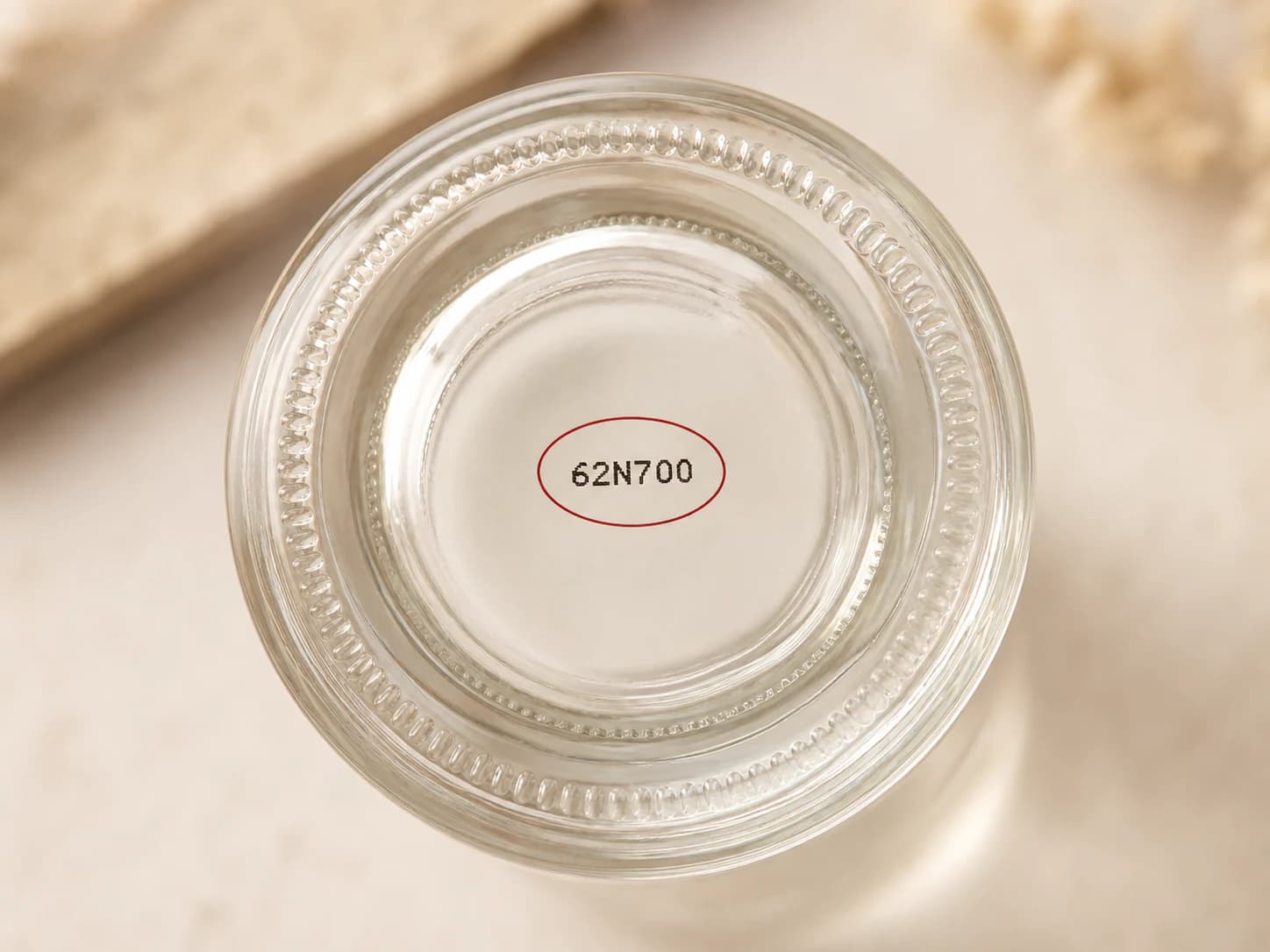
01Bottle base
Turn bottles and jars over first. Look around the base, bottom label, and lower rim.
Visual location guide
Check the most common locations first, learn what the code looks like, and reveal faint markings without damaging the packaging.
Look here first
Start with these three surfaces. The batch code is separate from the retail barcode; the precise position varies by product and packaging.
01Turn bottles and jars over first. Look around the base, bottom label, and lower rim.
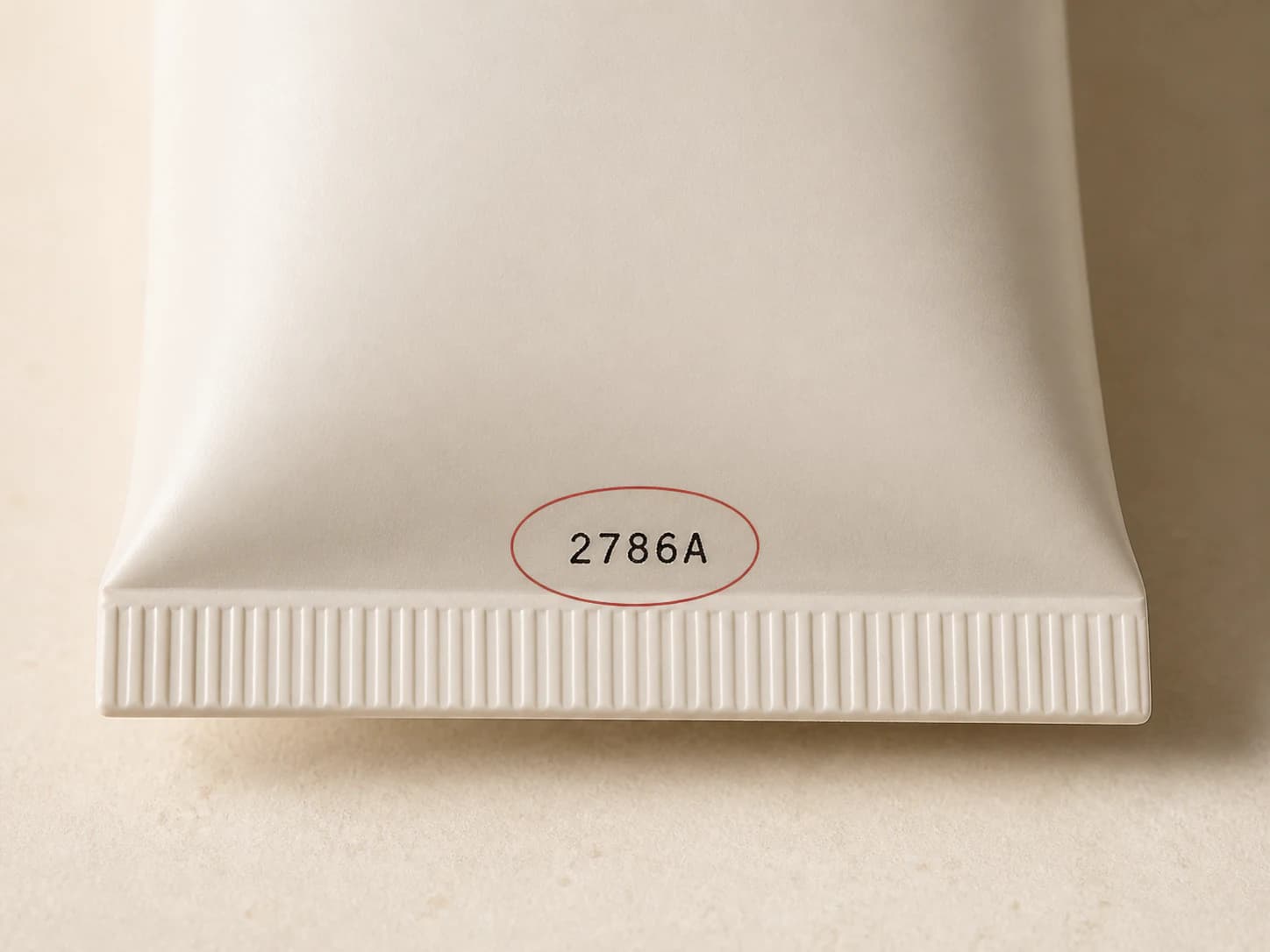 02
02Inspect the folded seal at the end of the tube for stamped or inkjet-printed characters.
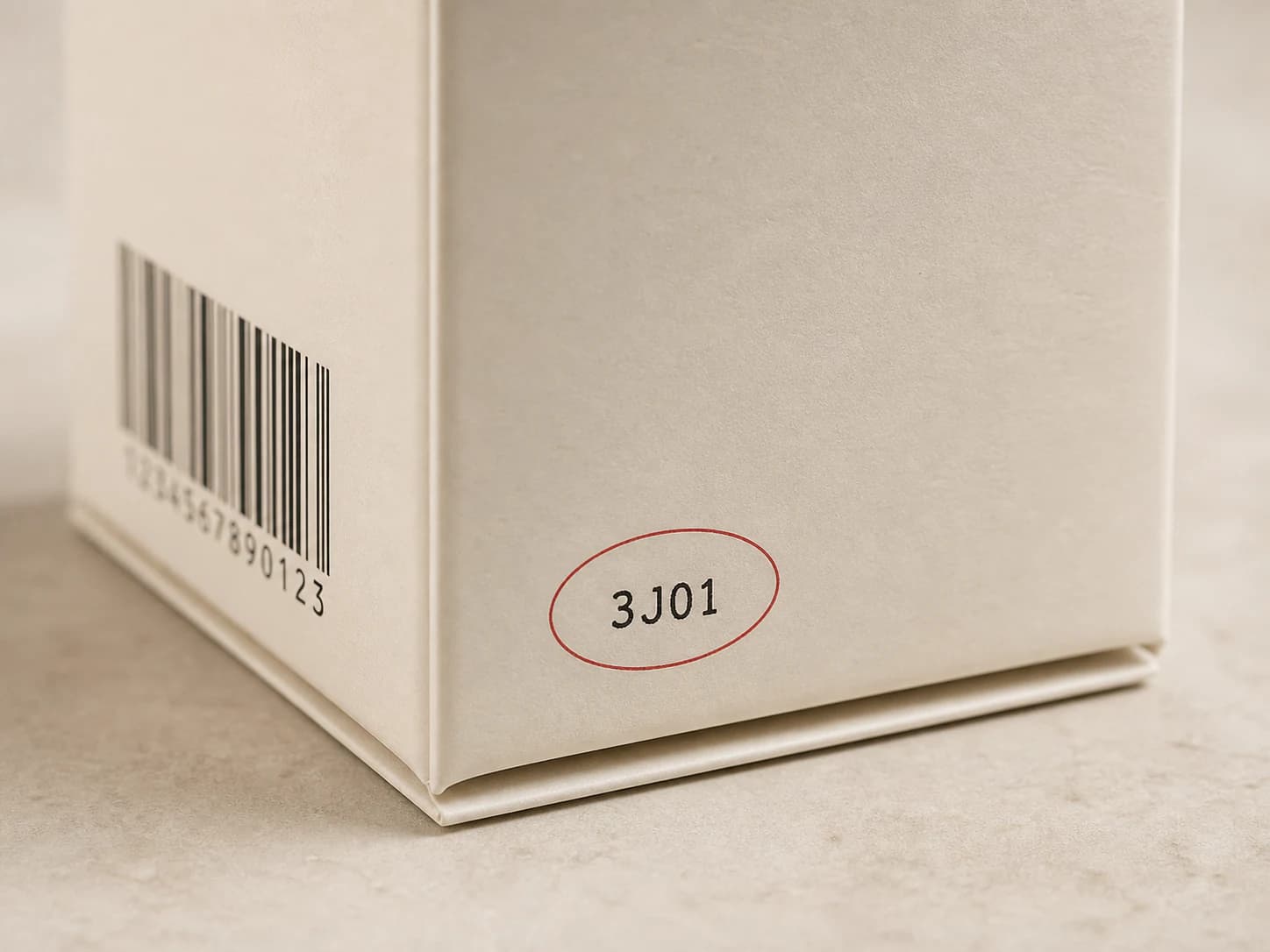 03
03Check the bottom panel, side flap, and the area beside the barcode on the carton.
Interactive location guide
Select the product in your hand to see the most likely batch-code locations first.
Start here
Turn the product over first. Most bottle and jar codes sit on the base.
Recognize the code
A batch code is a short manufacturing identifier. A barcode is the longer retail code printed below vertical black lines.
Look for a separate string of letters or numbers, sometimes introduced by “LOT” or “BATCH”. These examples illustrate appearances, not a shared date formula. Length varies by brand.
Short alphanumeric code
Illustrative example
Longer alphanumeric code
Illustrative example
Digits with a leading zero
Illustrative example
Still cannot find it?
Use angled light
Rotate the package slowly under a bright lamp to reveal shallow embossing or laser etching.
Take a close-up photo
Your phone camera can enlarge tiny dot-matrix printing and improve contrast.
Check the outer box
Some brands place the code only on the carton, usually near the barcode or on a flap.
Feel the surface
Run a fingertip over the base or seam to detect characters you cannot see clearly.
Packaging images are location illustrations; markings vary by product. For the difference between product dates and condition, see the FDA shelf-life guidance. Updated .
Code found